
Cost Reduction: AI Agents vs. Human Employees
ROI analysis of implementing autonomous AI workers in your marketing department.
3/14/20265 min read
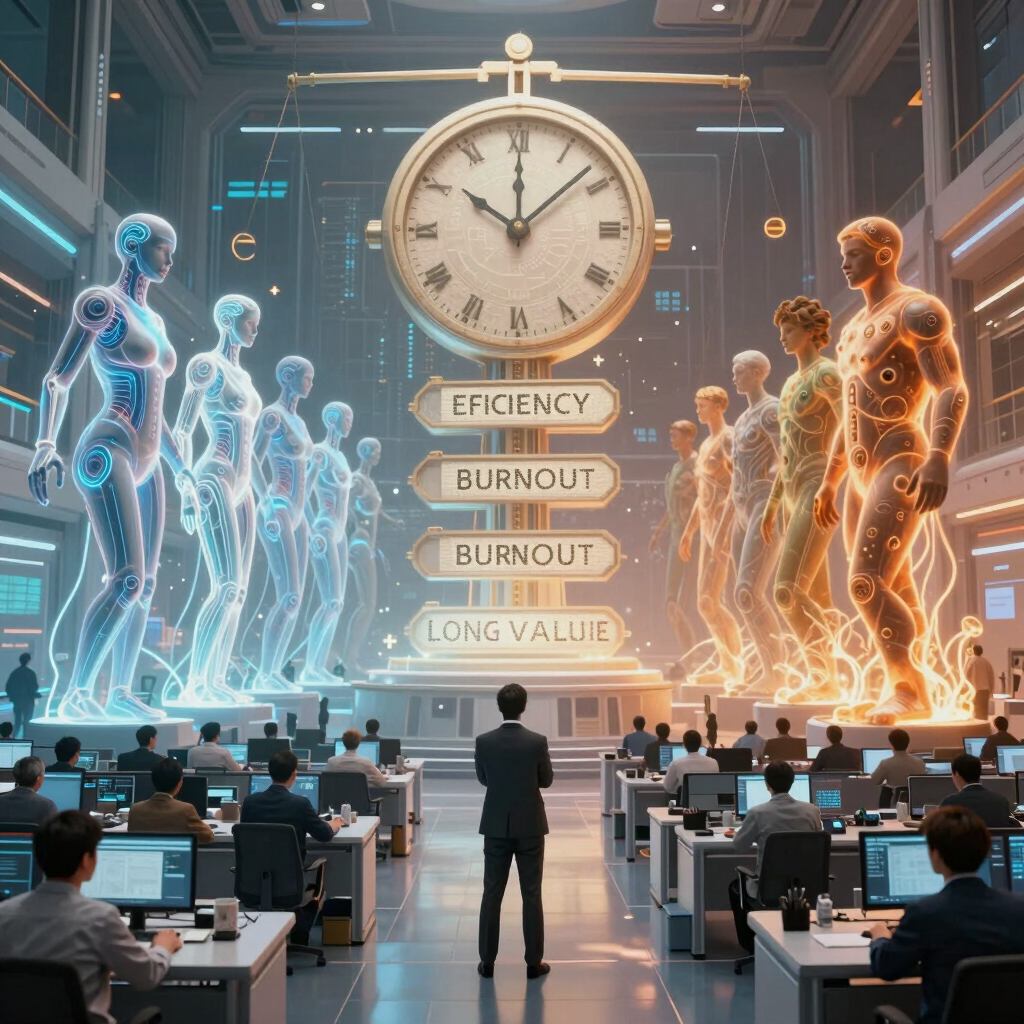
Understanding AI Agents and Human Employees
In the contemporary workforce, the integration of technology and human resources has created a dynamic environment where AI agents and human employees coexist. AI agents, also known as artificial intelligence personnel, are computer programs designed to perform specific tasks traditionally carried out by humans. These automated systems utilize algorithms and data analytics to streamline operations, enhance productivity, and improve efficiency across various sectors. With capabilities to analyze vast amounts of data, AI agents can execute tasks such as customer service inquiries, data entry, and predictive analytics, often at a pace that exceeds human capabilities.
On the other hand, human employees bring unique skills and attributes to the workplace that AI agents cannot replicate. Emotional intelligence, creativity, critical thinking, and adaptability are some of the key qualities that define human workers. Their ability to understand nuanced human emotions, engage in complex problem-solving, and foster interpersonal relationships allows them to collaborate effectively and innovate within their roles, which is crucial in sectors such as healthcare, education, and creative industries.
The interaction between AI agents and human employees is particularly prominent in industries like finance, customer service, and manufacturing. For instance, in customer service, AI chatbots can handle simple inquiries and relieve human agents to manage more complicated cases that require empathy and nuanced understanding. This collaborative environment illustrates how both AI agents and human employees can enhance overall productivity while allowing each to focus on their strengths.
Understanding the roles of AI agents compared to human employees is essential, as it reflects the shifting landscape of the modern workforce. By acknowledging the distinct functions and contributions of each, organizations can better strategize for cost reduction while maximizing the benefits of both technology and human input.
Cost Comparison: AI vs. Human Labor
In recent years, businesses have increasingly explored the potential of AI agents as a means to cut costs and enhance efficiency. The comparison between the financial implications of employing AI agents and human employees involves several critical factors. Initially, the investment costs associated with AI implementation can be significant. Businesses typically allocate budgets for hardware, software, and the necessary infrastructure to support AI systems. However, these are mostly one-time costs compared to the ongoing salaries and benefits required for human employees, which can accumulate significantly over time.
Ongoing maintenance of AI systems also necessitates a financial commitment, albeit often lower than the recurring overhead costs attached to human labor, which includes salaries, benefits, and additional expenses such as workers' compensation and taxes. AI systems, once deployed, usually require periodic updates, but with advancements in automation, these costs can be minimized.
Moreover, organizations cannot overlook the hidden costs of managing human employees, including expenses related to training, productivity rates, and employee turnover. Training new staff often requires substantial investment in resources and time, while AI systems can be programmed to perform tasks quickly and efficiently without the need for extensive onboarding. Additionally, high turnover rates among human workers can lead to increased operational disruptions and training costs, burdening the organization's budget.
Real-world instances illustrate the cost-saving potential of integrating AI. For example, companies in the manufacturing sector have successfully utilized AI-driven automation to achieve significant reductions in labor costs and improve productivity. By considering both direct and indirect costs associated with AI and human labor, businesses can make informed decisions that align with their financial goals while maximizing operational efficiency.
Benefits and Drawbacks of AI Agents and Human Employees
The increasing use of AI agents in various sectors has led to significant discussions regarding their benefits and drawbacks compared to traditional human employees. One of the main advantages of AI agents is their efficiency. They can process vast amounts of data at high speeds and are able to handle repetitive tasks without fatigue, making them ideal for operations that require consistency and scalability.
Moreover, AI agents can significantly reduce errors in tasks where precision is paramount. For instance, in industries such as finance and manufacturing, AI can minimize costly mistakes associated with human oversight. Furthermore, AI agents are available 24/7, thereby enhancing customer service through immediate responses, which can lead to increased customer satisfaction.
However, while AI excels in these areas, it lacks the intuition and empathy that human employees bring to the table. Human workers possess critical thinking skills and the ability to make nuanced decisions based on context, emotional intelligence, and life experiences. This capability is particularly evident in customer service scenarios where nuanced understanding of a client's concerns can lead to more effective resolutions.
In complex problem-solving situations, human adaptability shines, allowing employees to think on their feet and adjust to unforeseen circumstances. The creativity that humans possess is also crucial in roles that require innovation and brainstorming, which AI agents cannot replicate. As such, organizations might find themselves at a crossroads when deciding whether to replace human employees with AI technology completely.
A blended approach, utilizing both AI agents and human employees, often provides the most effective solution. For example, AI can handle low-level inquiries to free up human resources for tasks that require advanced critical thinking and customer engagement. This collaboration leverages the strengths of both AI and human employees, maximizing productivity and fostering a well-rounded workplace.
Future Trends: The Evolving Workforce Landscape
The landscape of the workforce is undergoing significant transformation, influenced by advancements in AI technology and evolving labor demands. As AI agents become increasingly capable, the relationship between human employees and artificial intelligence is shifting. The integration of AI into various sectors has the potential to automate repetitive tasks, thereby raising efficiency levels across organizations. However, this rise in automation does not signify the complete obsolescence of human roles; rather, it opens a dialogue about the synergies that can exist between AI agents and human talent.
One of the notable trends is the growing demand for skills that complement AI capabilities. As more organizations adopt AI practices, the necessity for employees who possess a blend of technical acumen and soft skills—such as creativity, empathy, and critical thinking—will increase. This shift underscores the importance of reskilling and upskilling initiatives aimed at preparing the workforce for an AI-enhanced environment. Companies are more likely to invest in employee training programs that emphasize adaptability, collaboration, and innovation, fostering a workforce that can thrive alongside machines.
Additionally, as AI takes over mundane tasks, humans will have the opportunity to engage in more strategic and decision-making roles. Such a model not only leads to increased job satisfaction but also encourages a culture of continuous improvement within the workplace. However, businesses need to consciously address the ethical implications associated with the implementation of AI technologies. This involves considering the socio-economic impacts on current employees, tackling potential disparities, and ensuring job security for all individuals affected by these changes.
Looking towards the future, organizations must develop strategies that seamlessly integrate AI while valuing the unique contributions of human employees. By embracing AI for routine tasks and empowering humans for nuanced decision-making, companies can cultivate a balanced workforce that capitalizes on both technological advancements and human expertise. In preparation for this inevitable evolution, businesses that prioritize transparency, ethical considerations, and upskilling initiatives will be well-positioned to thrive in the changing labor market.