
Multi-Agent Systems: The Marketing Team of the Future
How different AI agents (researcher, writer, designer) work together in harmony.
3/14/20264 min read
Understanding Multi-Agent Systems
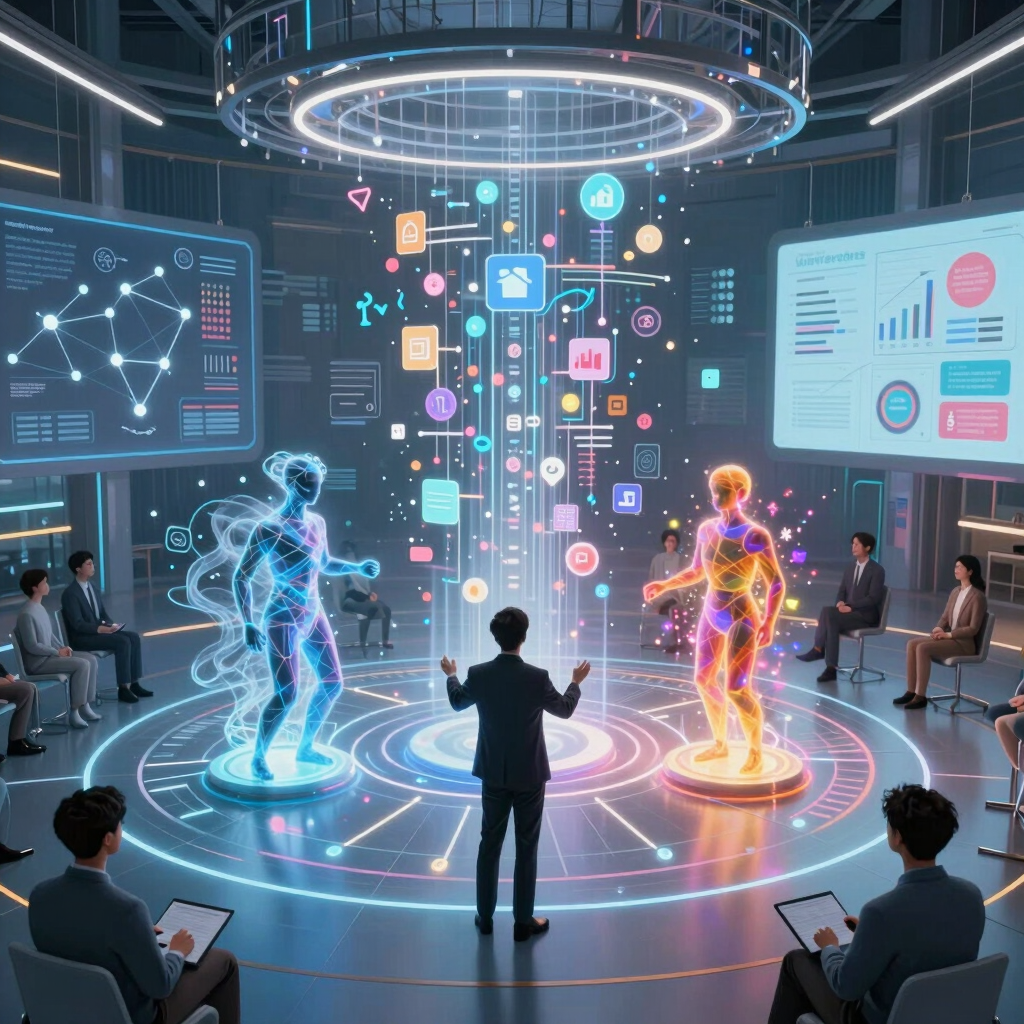
Multi-agent systems (MAS) comprise a collection of autonomous agents that work collaboratively to accomplish complex tasks. Each agent operates independently while also communicating and coordinating with one another to enhance their efficacy. In the realm of marketing, the significance of multi-agent systems cannot be overstated, as they offer a robust framework for managing diverse marketing tasks through optimization and innovation.
The fundamental characteristics of agents within multi-agent systems include autonomy, cooperation, and adaptability. Autonomy enables agents to make decisions without human intervention, allowing for efficient responses to market dynamics. This self-governance is essential in a marketing environment that often demands rapid adjustments to shifting consumer preferences and competitive challenges.
Cooperation among agents enhances the capability to execute complex marketing strategies. Agents can share information, resources, and expertise, making it possible to develop a richer understanding of consumer behavior and preferences. This collaborative effort is especially valuable in environments that require real-time data analysis and decision-making, as agents can work together to gather and interpret vast amounts of information swiftly.
Adaptability is another critical component of multi-agent systems. Marketing landscapes frequently shift due to technological advancements or changes in consumer sentiments. Agents are designed to learn from their interactions and adapt their strategies accordingly. Consequently, businesses leveraging such systems can remain responsive to emerging trends, improving their chances of maintaining customer engagement.
Implementing multi-agent systems for marketing tasks offers numerous benefits, including increased efficiency in campaign execution, enhanced customer targeting, and the capability to automate routine tasks. As organizations continue to embrace digital transformation, understanding and utilizing multi-agent systems will be instrumental in redefining marketing strategies and achieving a competitive edge in the marketplace.
The Role of Multi-Agent Systems in Marketing
Multi-Agent Systems (MAS) are increasingly pivotal in modern marketing strategies, providing a framework for enhanced efficiency and improved decision-making. These systems consist of multiple autonomous agents that interact and collaborate to achieve marketing objectives, making them particularly valuable in today's data-rich environment.
One of the key applications of MAS in marketing is data analysis. By leveraging multiple agents, organizations can analyze vast amounts of consumer data swiftly and accurately. These agents can process complex datasets, identify trends, and generate insights that guide the marketing team in tailoring their strategies effectively. Furthermore, they can autonomously update and refine analytic models as new data emerges, ensuring continuous improvement and adaptation to changing market conditions.
In the realm of customer engagement, MAS play a crucial role in creating personalized marketing campaigns. Using data gathered on customer preferences and behaviors, agents can deliver targeted content and personalized messages across multiple platforms. This not only enhances the customer experience but also increases the likelihood of engagement and conversion, ultimately leading to improved customer loyalty.
Additionally, decision support systems powered by MAS provide marketing teams with the tools necessary to make informed choices quickly. By simulating various marketing scenarios and predicting outcomes, these systems facilitate collaborative decision-making, allowing team members to assess the potential impacts of different strategies. This collaborative efficiency streamlines the execution of marketing plans and helps in identifying opportunities for optimization.
Overall, the integration of multi-agent systems in marketing teams fosters a more dynamic environment where collaboration is enhanced, marketing strategies are executed more efficiently, and data-driven decision-making prevails. Embracing these technological advancements can lead to significantly improved marketing outcomes, preparing organizations for the future of marketing.
Challenges and Solutions in Implementing Multi-Agent Systems
The integration of multi-agent systems within existing marketing teams presents several challenges that organizations must navigate to optimize their marketing strategies effectively. One significant hurdle is the inherent complexity of these systems. Multi-agent systems consist of various autonomous agents that work collaboratively, which can complicate the overall architecture and functionality. This complexity often leads to difficulties in understanding and utilizing the system efficiently, especially for teams accustomed to traditional marketing processes.
Another challenge is the integration of multi-agent systems with existing marketing workflows. Many organizations have established processes and tools that may not be inherently compatible with new technologies. This lack of alignment can result in resistance from team members and ultimately impede the effectiveness of the new system. Additionally, resource allocation poses another significant challenge. Organizations may need to allocate substantial financial and human resources to implement these sophisticated systems, which can strain budgets and staffing.
Moreover, the successful deployment of multi-agent systems requires specialized skills that may not be readily available within the current marketing team. The knowledge required to manage and optimize these systems often extends beyond traditional marketing expertise, necessitating training and professional development.
To overcome these challenges, organizations can adopt several strategies. Implementing gradual change can facilitate smoother transitions; beginning with pilot projects can help teams adapt to new systems without overwhelming them. Concurrently, investing in training programs can equip marketing personnel with the necessary skills to effectively engage with multi-agent systems. Furthermore, leveraging existing technologies and tools can ease the integration process, allowing organizations to create a more cohesive marketing environment.
The Future of Marketing Teams in an AI-Driven World
As organizations increasingly recognize the transformative potential of artificial intelligence and multi-agent systems, marketing teams stand at the forefront of this revolution. The future landscape of marketing is being reshaped by these advanced technologies, fostering a deeper integration of data-driven insights and automation in daily operations. This evolution introduces new dynamics that will significantly impact team structures, roles, and skill sets.
In an AI-driven world, marketing teams will leverage multi-agent systems to enhance collaboration and efficiency. These systems will streamline communication, foster innovative problem-solving, and optimize marketing campaigns in real-time. Marketers will no longer be solely responsible for manual tasks; instead, they will work alongside intelligent algorithms that analyze consumer behavior, segment audiences, and predict trends. This shift will allow teams to focus on strategic decision-making and creative processes, enhancing their overall effectiveness.
Emerging trends suggest that the role of marketers will evolve to include greater technical proficiency and adaptability. As AI tools become more prevalent, teams will require members who possess not just traditional marketing expertise, but also a strong understanding of data analytics and machine learning. The convergence of marketing and technology will necessitate ongoing education and training to keep pace with the rapid advancements in these fields.
Furthermore, the introduction of AI could lead to the rise of interdisciplinary teams, combining professionals from diverse backgrounds, such as data scientists, content creators, and UX designers. This collaborative environment will foster innovation, allowing marketing teams to devise novel approaches to engage audiences effectively. Ultimately, the future of marketing teams in an AI-driven world promises to be one of increased collaboration, enhanced efficiency, and an ever-present focus on adaptability to stay ahead in a competitive landscape.