
The future of growth: why AI agent marketing is replacing traditional automation
Explore why AI agents are fundamentally shifting the marketing landscape by moving beyond rigid automation to autonomous decision-making. This deep dive analyzes the technological transition, strategic advantages, and the future of hyper-personalized growth in a machine-led economy.
1/19/20265 min read
The future of growth: why AI agent marketing is replacing traditional automation
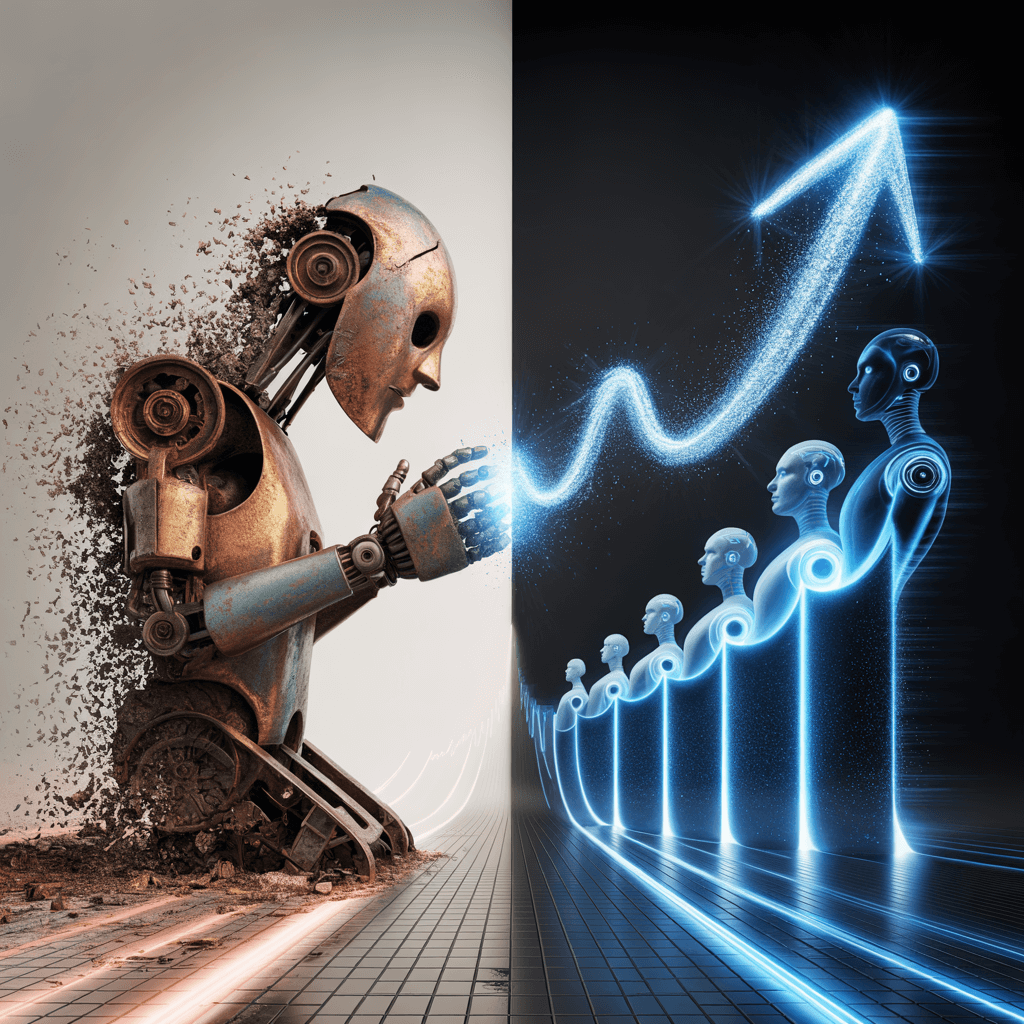
The marketing industry is currently undergoing its most significant structural shift since the invention of the programmatic ad exchange. For the past decade, the industry has relied on "traditional automation"—a series of rigid, if-then logic gates designed to scale human effort. However, we have reached the ceiling of what static automation can achieve. The next era of growth is not defined by faster workflows, but by AI agents: autonomous entities capable of reasoning, adapting, and executing complex marketing strategies with minimal human intervention.
To understand why this transition is happening, we must first distinguish between the tools of yesterday and the intelligence of tomorrow. Traditional automation is reactive; AI agent marketing is proactive. As we look toward 2026 and beyond, the brands that dominate will be those that transition from managing software to mentoring agents.
The fundamental limits of traditional automation
Traditional marketing automation was built on the premise of the "linear journey." We assumed that if a customer clicked a link, they wanted an email; if they opened that email, they wanted a whitepaper. This approach created massive efficiencies, but it also created massive friction.
Rigidity of logic: Traditional automation requires a human to map out every possible outcome. If a user behavior falls outside the predefined flow, the automation fails or delivers an irrelevant experience.
Data silos: Most automation tools "see" only the data within their own ecosystem. They lack the holistic context required to understand a customer’s true intent.
Maintenance heavy: As marketing stacks grow, the "spaghetti code" of interconnected automations becomes a liability. Marketing operations teams spend more time fixing broken triggers than innovating.
In contrast, AI agents do not follow a map; they follow a goal. This shift from process-oriented to goal-oriented marketing is the catalyst for the current revolution in SEO (keresőoptimalizálás) and digital strategy.
Defining the ai agent: from tools to teammates
An AI agent is not just a chatbot or a generative text tool. In the context of modern marketing, an agent is a system that possesses agency. It can perceive its environment (your market data, competitor moves, and user behavior), reason about the best course of action based on a high-level objective, and then take action using various tools.
While traditional automation is like a train on tracks, an AI agent is like a self-driving car. It knows the destination, but it decides which turns to take based on real-time traffic, weather, and road conditions.
The three pillars of agentic marketing
Reasoning: The ability to process unstructured data and make logical inferences.
Memory: Maintaining long-term context across multiple sessions and channels to ensure brand consistency.
Actionability: The power to interface with APIs, publish content, adjust bids, and send communications without a human hitting "send."
Why the shift is inevitable for global growth
The primary reason AI agents are replacing traditional automation is the sheer volume of data that modern marketers must process. It is no longer humanly possible to optimize for thousands of micro-segments in real-time.
Hyper-personalization at the edge
Traditional automation offers "segmentation"—grouping people into buckets. AI agents offer "individualization." An agent can synthesize a user's past purchase history, recent social media interactions, and current browsing intent to create a unique offer, creative asset, and delivery time specifically for that one person. This level of SEO (keresőoptimalizálás) and conversion optimization was previously a pipe dream.
Real-time strategic pivoting
In a traditional setup, changing a campaign strategy requires meetings, creative briefs, and manual updates across multiple platforms. An AI agent monitoring market trends can see a competitor’s price drop or a sudden shift in consumer sentiment and adjust your entire campaign logic in minutes. This agility is the new "unfair advantage" in competitive niches.
The impact on seo (keresőoptimalizálás) and content strategy
SEO (keresőoptimalizálás) is perhaps the area most affected by the rise of AI agents. We are moving away from a world of "search engines" and toward a world of "answer engines" and "action engines."
Optimization for agentic discovery
As consumers begin using their own personal AI agents to find products and services, the goal of SEO (keresőoptimalizálás) changes. We are no longer just optimizing for a Google algorithm; we are optimizing for "LLM visibility." Agents look for structured data, authoritative claims, and verifiable facts. Content must now be designed to be parsed and recommended by machines that prioritize utility over keyword density.
Content as a dynamic asset
Instead of static blog posts, AI-driven growth strategies utilize dynamic content blocks that agents can reassemble to answer specific user queries. This ensures that the brand is always providing the most relevant information, regardless of how the user discovers them.
The evolution of the marketing tech stack
The "MarTech" landscape is being hollowed out. We are seeing a "platform collapse" where disparate tools for email, social, and ads are being replaced by central AI hubs. In this new ecosystem, the most valuable asset is no longer the software you subscribe to, but the proprietary data you use to train your agents.
Traditional systems relied on human-defined rules that were static and required constant manual updates. AI Agent marketing relies on LLM-based reasoning that is self-correcting and learning. Furthermore, while traditional tools primarily used structured database fields, agents utilize multi-modal data including text, image, and voice to achieve outcomes like growth and ROI rather than just simple efficiency.
Addressing the challenges of autonomous marketing
While the benefits are clear, the transition to agent-based marketing is not without its hurdles. For a professional with 20 years of experience, the primary concern is always brand safety and ethical alignment.
The "black box" problem
One of the greatest fears in AI agent marketing is the loss of control. If an agent is making decisions autonomously, how do we ensure it stays "on brand"? The solution lies in constitutional AI—giving agents a set of unbreakable rules and brand guidelines that govern their reasoning process.
Skill set migration
The role of the marketer is shifting from "doer" to "orchestrator." We are moving toward a "Manager of Agents" model. Success in this new era requires a deep understanding of prompt engineering, data architecture, and strategic oversight rather than tactical execution.
The economic shift: pay-per-outcome
Traditional automation is often priced by "seats" or "contacts." AI agent marketing is pushing the industry toward a "pay-per-outcome" model. Because agents are directly tied to goals (leads, sales, retention), the economic relationship between brands and their technology providers is becoming more aligned with actual business growth.
Strategic implementation: how to transition
For companies looking to move beyond traditional automation, the process should be incremental.
Identify high-friction workflows: Look for areas where your team is manually moving data or making repetitive decisions.
Build a "shadow agent": Deploy an AI agent to observe a process and suggest actions without actually executing them.
Establish guardrails: Define the parameters of what the agent can and cannot do.
Scale autonomy: As the agent proves its reliability, give it more agency to execute tasks independently.
This methodical approach ensures that SEO (keresőoptimalizálás) and broader marketing efforts remain stable while the underlying technology evolves.
The future of human-agent collaboration
The most successful marketing organizations of 2030 will not be "AI-only." They will be "Human-plus-Agent." Humans provide the empathy, the "vibe," and the high-level creative vision that machines cannot replicate. The agents provide the scale, the precision, and the 24/7 execution.
By offloading the "drudgery" of traditional automation to intelligent agents, marketers are finally free to return to what they do best: building relationships and telling stories that resonate on a human level. The replacement of traditional automation by AI agents is not just a technical upgrade; it is a fundamental reimagining of what it means to grow a brand in the digital age. Those who embrace this shift today will be the architects of tomorrow's market leaders.